



ON the rugged, dusty roads leading to the founding monarch of the Ndebele state King Mzilikazi’s final resting place at Mhlahlandlela, 22 kilometres outside Bulawayo, a glaring contrast emerges just a few kilometers away: the smooth, tarred path to Cecil John Rhodes’ grave.
Over a century later after his death, King Mzilikazi, remains a towering figure in Zimbabwe’s history, yet his grave, and the respect it commands, tell a different story.
As Bulawayo celebrated the 156th anniversary of his death with vibrant festivities and cultural displays, calls for proper recognition of King Mzilikazi’s contributions echoed through the city.
While the annual celebration of Umgubho weNkosi uMzilikazi has become a major event on the city’s cultural calendar, many believe the infrastructure honouring the Ndebele king has been long neglected.
The commemoration, organised by the Mthwakazi ka Mzilikazi Cultural Association and Iqoqo lamaNtungwa, has become a significant event not only in celebrating Ndebele heritage but also in promoting cultural tourism.
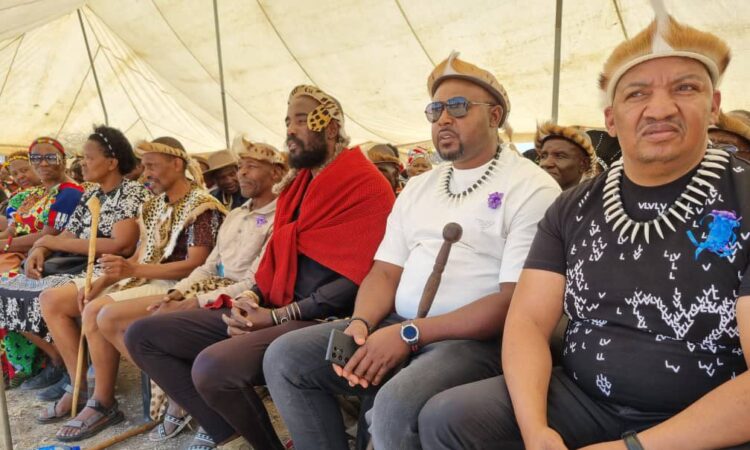
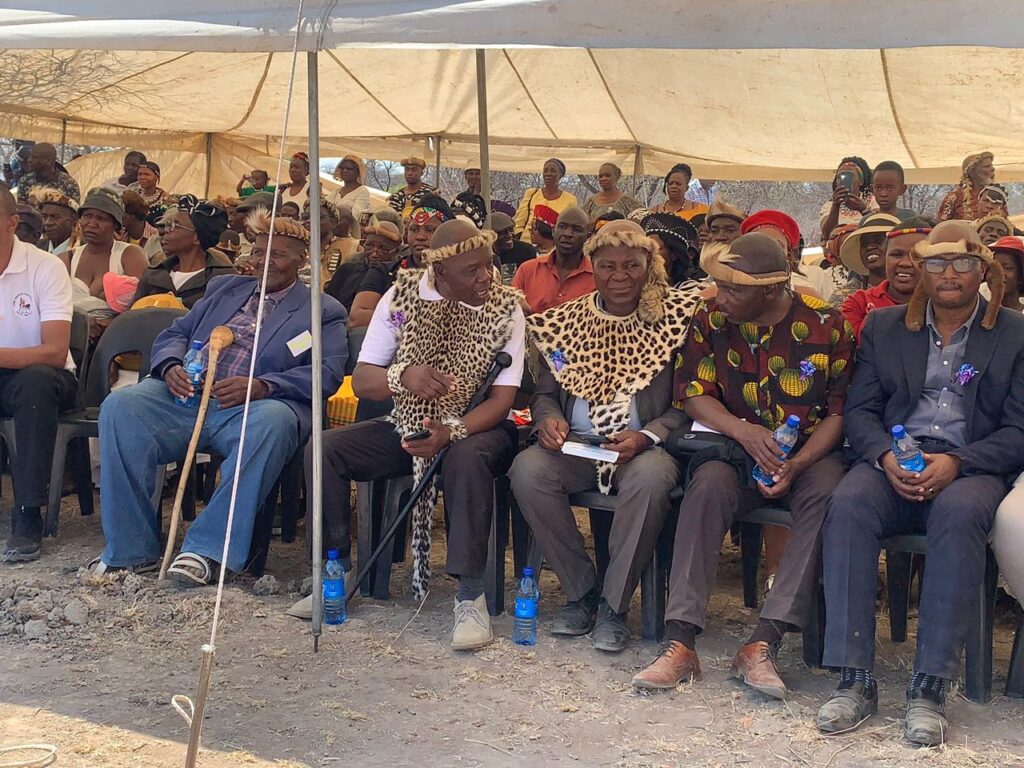
The anniversary was a spectacular affair, complete with colourful Nguni regalia and a carnival atmosphere, drawing hundreds of attendees from different parts of the country and beyond.
In a stirring call for recognition, Bulawayo mayor David Coltart who also attended the event underscored the need for greater acknowledgment of King Mzilikazi Day.
He pointed out that without the king’s establishment of his kingdom, the city’s very fabric embodied by landmarks such as City Hall would be different.
“King Mzilikazi’s legacy is embedded in the foundation of Bulawayo itself. The day deserves to be the highlight of our city’s calendar,” Coltart declared.
However, the celebration has been overshadowed by a glaring disparity. While tarred roads lead to the grave of Cecil John Rhodes, the path to King Mzilikazi’s final resting place remains rugged and unkempt.
Coltart expressed his disapproval: “As a white person, I find it absurd that we have wide, tarred roads leading to Cecil John Rhodes’ grave but not to King Mzilikazi’s. Why should we have to use a bumpy road to visit a King’s grave? That must change! We need to address this, of course, while respecting cultural sensitivities, which the family must guide us on.”
The call for transformation extends beyond just infrastructure.
Coltart envisions the creation of an interpretive center dedicated to King Mzilikazi, which would honour his legacy and attract tourists, bolstering the city’s economic and cultural profile.
“Properly acknowledging King Mzilikazi’s contributions could be a cornerstone for tourism and a way to preserve our rich history for future generations.
“Our city boasts one of the richest cultures and histories in Southern Africa. Bulawayo was founded in 1840, long before many other cities and towns in the region. Our history is deeper because of King Mzilikazi. As a council, we must honour this day. It should be the most significant day in our calendar,” he said.
As Bulawayo reflects on its past and looks to the future, the push to honour King Mzilikazi with the recognition and infrastructure he deserves stands as a testament to the city’s commitment to celebrating its heritage.
To mark the day, the festivities in Bulawayo kicked off with a lively procession from Matshobana suburb to the iconic City Hall, culminating in the main ceremony at Mhlahlandlela.
The City of Kings came alive as crowds of young and old gathered to celebrate. The streets echoed with the passionate energy of poets, the joyful ululations of women, and the enthusiastic whistles of bystanders, all rising early to honour a day that is swiftly becoming a cornerstone of Bulawayo’s cultural calendar.
What began as a cultural commemoration has evolved into a dazzling spectacle, blending fashion and heritage. For some, it’s an opportunity to flaunt their traditional attire, while for others, it serves as a poignant reminder of the epic journey undertaken by the founding monarch from KwaZulu-Natal to the heart of present-day Bulawayo.
With traditional leaders, politicians, historians, civic society organisations and the business community being part of the event, those who addressed the exuberant gathering shared their insights about the day.
Chief Dakamela of Nkayi District thanked people from all walks of life that had made the long trek down the dusty road to Mhlahlandlela.
“People have come from all over for this particular event. You have some that have come from South Africa just for this and I also noticed that we have white members of our society among us. All this just shows how much of a powerful leader Mzilikazi was.
“He built this nation by bringing people from different places. A nation is not just the building or other kinds of infrastructure. It is the unity of the people, the kind of unity that we are seeing today. That is Ubuntu. As a traditional leader, I am happy to be here and I encourage people to continue coming in their numbers to show the support and remembrance we have for King Mzilikazi,” he said.
On his part Chief Gwebu of Umzingwane District had this to say: “I am happy to see the dedication that people have towards the betterment of King Mzilikazi’s legacy. It is always worthwhile to celebrate and remember something good and without King Mzilikazi, none of us would be here today. It is encouraging in particular to see our young people taking part in some of these ceremonies because it shows that they have one eye on their past and another on their future.”
Chief Gampu from Tsholotsho also added his voice. “We are doing a continuous bit of work that has been growing since the first edition of these celebrations and I am very eager to see where we go from here.”
Representing Amantungwa from South Africa, Thokozani Khumalo said they were happy with the growing importance of King Mzilikazi’s celebrations in Zimbabwe.
“We are happy that adults brought young people to this event because, without our young people, there’s no future for our culture. We would like to see unity amongst our people as a royal family. Let’s stand together because the preservation of our culture is everyone’s responsibility and that does not fall to the Khumalo family only,” she said.

King Mzilikazi and his son, King Lobengula, have left an indelible mark on Zimbabwe, particularly in Bulawayo, where their influence echoes through the city’s landscape. Their names are immortalized in the suburbs, schools, and streets, serving as daily reminders of their monumental role in shaping the Ndebele nation. From suburbs like Matshobane, Khumalo, and Lobengula, to schools such as Mzilikazi and Lozikeyi, the legacy of the Ndebele royal family is woven into the fabric of Zimbabwean life.
Mzilikazi is revered as a visionary leader and nation-builder, respected even by his adversaries. In 1821, after breaking away from King Shaka’s Zulu kingdom, he embarked on a great migration that would see him establish the Ndebele nation in what is now southwestern Zimbabwe.
As a former top military commander under Shaka, Mzilikazi’s departure marked the beginning of a historical exodus known as the Mfecane, a series of migrations and conflicts that reshaped southern Africa. Alongside other Nguni leaders like Soshangane and Zwangendaba, Mzilikazi’s influence spread far beyond Zimbabwe, leaving a legacy in places like Mozambique, Zambia, and Malawi.
Born in 1790 near Mkhuze in Zululand, South Africa, Mzilikazi passed away on September 5, 1868, after a prolonged illness.
His death, shrouded in secrecy by his inner circle, was only made public four days later. He was buried at Mhlahlandlela, near the sacred Matopo Hills, cementing his place in the annals of history.
But his death ignited a succession struggle. With no clear heir, Regent Mncumbatha Khumalo assumed leadership. However, divisions within the kingdom led to conflict, as some factions, including the Zwangendaba Regiment under Mbiko KaMadlenya Masuku, supported the belief that Nkulumane, Mzilikazi’s other son, was still alive in South Africa.
This power struggle culminated in a bloody conflict that ultimately saw Lobengula ascend to the throne. He ruled until 1893, when British forces invaded Bulawayo during the Anglo-Ndebele War. Lobengula’s mysterious disappearance after the infamous Shangani Patrol and Major Wilson’s Last Stand remains one of the most poignant moments in Zimbabwean history, a moment recently commemorated by President Emmerson Mnangagwa’s government.
The legacy of Mzilikazi and Lobengula endures, their contributions to Zimbabwean identity standing as a testament to their vision, strength, and leadership…. Daily News


