



Calvin Manika
A chill wind of a cold June morning had arrested the happiness of all members of our delegation.
We were not much worried about these savannah winter threats, but our mission was to celebrate the Day of the African Child.
It was 16 June 2007. ‘We Are Men of Men’, a motto inscribed in the school’s emblem attracted me as we entered the premises of Allan Wilson high school.
I inquired with my colleagues about the motto; none of them had an idea what motivated it.
10 years later, l was reminded of ‘We Are Men of Men’ motto.
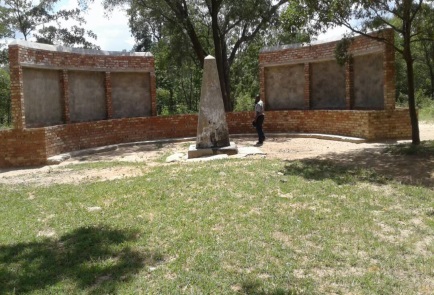
As we drove down the sandy terrain of Gomoza road, Lupane, in a Toyota Dyna pickup, loaded together with our biometric voter registration equipment someone said, “Apa ndipo pakafira Allan Wilson nevamwe vake” (this is where Allan Wilson and his men perished”.
I looked at the place, it was like a common site until I heard of that historical information.
Allan Wilson, a white soldier who had fought successfully in the Zulu war and first Boer war met his demise in the Matebele war, popularly known as the Shangani patrol.

Wilson led his Victoria column in the Shangani patrol in search of King Lobengula.
4 December 1893 is remarkable in the liberation struggle journey of Zimbabwe.
The illustrious Ndebele warriors cut off Wilson and 33 of his men from the main column and killed them.
The episode achieved a lasting protuberant place in our nation’s colonial history.
The battle is considered to be the equivalent of the battle of the Alamo, which was a pivotal event in the Texas revolution, or the battle of Shiroyama which marked the end of the Satsuma Rebellion in Japan.
Watching the play, ‘Wilson’s last stand’, a re-enactment of Wilson’s death, the documentary praises the last moments of Wilson and tries to give an impression that if he did not run out of ammunition he was going to defeat the Ndebele army.
The events of 4 December 1893 showed the resilience and resistance spirit of Zimbabweans to colonial itinerary.
Wilson and his men armed with the state of art artilleries of their day, could not outmanoeuvre the native people of Matabeleland.
The victory was a culmination of unity and the quest for freedom.
Published stories by some historians on the Matebele war are silent of the brave Ndebeles and King Lobengula, a man who assembled the mighty army to defend his state; instead they celebrate the last moments of Wilson.
Wilson was a victim of voracity and racial interests.
His national hero status in the then Rhodesia and British history symbolises that Cecil John Rhodes was an imperialist at heart.
Rhodesia was founded out of forced displacements and brutal attacks of the indigenous people.
Wilson is considered one of its founding fathers.
British are still celebrating the life of Wilson and his patrol team.
Wilson and his men were initially buried at Pupu area in Lupane and moved to Great Zimbabwe Ruins on 14 August 1894.
Later on, there were exhumed again and buried at Matopos in July 1904.
Europeans frequently visit these places and teach their children for future generations.
When I was growing up in Kuwadzana, Harare, I used to hear people saying, “Lobengula akatengesa nyika nekuda sugar” (Lobengula sold out the country because of a pinch of sugar).
Zimbabweans do not need Wilson to resurrect and give them a narration of how he was humbled and outnumbered by King Lobengula’s army.
Whether Europeans call it the last stand or the courage of Wilson, it was a defeat and victory to a five star general, King Lobengula.
History has been twisted to achieve personal scores of the people who have been allowed to write our history.
Visiting Allan Wilson High school depicts how the Rhodesian government exalted him even in death. The school is an ‘A’ school in a leafy location of Harare Central Business District.
Their motto was originally, ‘There Were Men of Men’ (Allan Wilson and his men) until it was changed to ‘We Are Men of Men’.
Our children still recite the motto, adulatory the spirit of Allan Wilson.
African history needs to be re- taught that Lobengula troops were real men. I believe that if a residential suburb bearing the name of Allan Wilson was to be built, it was going to be a low density suburb.
History challenges Zimbabweans to be proud of King Lobengula because he was mightier than Wilson.
The unveiling of the tomb of Lobengula’s army general by President Emmerson Mnangangwa, which has been postponed to a later date this month is the beginning of acknowledging the role the king and his men played in the liberation struggle.
2 Comments
Leave a Response
You must be logged in to post a comment.


this wonderful keep on the good work..
Thanks