



Calvin Manika
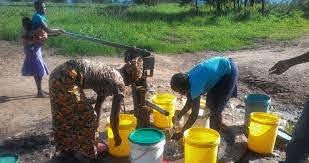
LAST year in September the Greater Whange Residents Trust (GWRT) convened a Hwange Water Summit. The summit which was held at the Wankie Colliery Hospital Conference Hall was graced by key stakeholders amongst them the Member of Parliament for Hwange Central, councillors, ZINWA, Lower Gwayi Catchment officials, Hwange Colliery Company Limited and Zimbabwe Power Company representatives. Hwange has for years been facing a water crisis. Most parts of the town go for a day or two at intervals without the precious liquid. Residents have since resorted to store water in large quantities in containers. With the scorching heat of Hwange, life has been grim without consistent supply of portable water. Authorities in Hwange have attributed to the damaged water distribution pipelines from Zambezi River. Hwange has three concession areas and one which falls under the local board jurisdiction. The concessions are owned by Hwange Colliery Company, Zimbabwe Power Company and National Railways of Zimbabwe. It is in these concessions where water crisis is rife with the Hwange Colliery jurisdiction topping the list.
Hwange stakeholders have for years pointed that separate centres of power are the major causes of poor service delivery including water challenges facing the general populace.
Greater Whange Residents Association chair Fidelis Chima condemned the lack of a collective approach with regards to th crisis.
“Operating without a master plan and a single administration has severely affected service delivery in Hwange especially the provision of water. Most of our people are in concession areas, with the majority in Hwange Colliery concession. Colliery Company no longer has the capacity,” Chima said
Hwange Central legislator Daniel Molokeli during the recent Water summit he said:
“Water challenges should be dealt with as a matter of urgency. I took a tour in the area to appreciate the situation on the ground. Surely Hwange has changed since the days we were growing up in this area. Water is now scarce people are suffering from challenges caused by lack of water. I have tasked my team to come up with all problem areas from the source to the user so that we strategize on coming up with a maintenance plan. Most of the pipes busted, in some instances it’s a matter of repair but in other areas we need a new system of water supply.”
It has been a year since all stakeholders come together but the crisis is still a life threat to the residents of ‘manumbers’ as concession areas are commonly referred to.
While the Water Act defines primary and environmental water uses, most of the clauses in the Act relate to the management of water for commercial use. The Water Act of 1998 became effective in 2000 and also paved the way for the creation of the Zimbabwe National Water Authority Act of 1998 which created a separation of functions between commercial activities related to water resources development and management vested in ZINWA and statutory functions vested in the Department responsible for Water Affairs.
The Water Act is supported by a Water Policy of 2013. Zimbabwe never had a Water Policy until 2013. Before then, issues of policy were implied but could not be traced to any document. In Hwange ZINWA has no jurisdiction in the problematic concession areas. Tamuka Moyo a resident said: “I live in number 1, Lwendulu village. Water is a great challenge, it comes during the night. Shortage of water has caused us to live under torrid conditions which no man can adapt to”. His views were echoed by Thamsanqa Dube: “Zambezi River is not far from us but the authorities are failing us. The colliery company must repair all broken and leaking pipes along the pipeline. It is the duty of the colliery police to patrol along the pipeline to monitor any vandalism. I hope the resolutions from last year’s water summit must be pushed forward especially the incorporation issue.”
Just across the Bulawayo – Victoria Falls road as one faces the mountain housing the Baobab hotel, the Independence Road mark the beginning of Hwange Local Board jurisdiction, narratives are different. There are no water shortages. Recently the Hwange Local Board finished the construction of a water reservoir to support the already existing functional water system. The accomplishment came at a time the world is affected by the COVID-19 pandemic


