



Musa Makina
ON paper, political parties have done a lot in the fight against GBV, some even going as far as spelling out party policies denouncing the vice that continues to claim lives despite laws penalising it.
In reality, the opposite is true as research shows that the rights of female politicians, some even in leadership positions, are being wantonly violated and disregarded by their male counterparts.
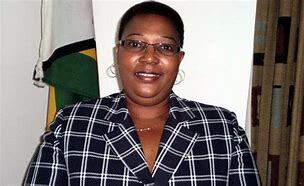
A recent case is an incident where then interim MDC-T President Thokozani Khupe was slapped by a mere party follower during the party’s elective congress held in Harare.
To date, the attacker has not been arrested nor sanctioned by the party, leaving Khupe and other women to endure the continued abuse of female politicians.
The incident signifies a sad and continued chapter in the country’s politics, with Khupe being one of the many victims of sustained physical, verbal and other forms of attack by male counterparts.
A research conducted by this publication revealed that all the country’s major political parties do not have specific policies on GBV, raising questions on their commitment to walk the talk in the fight against GBV.
Zanu PF has been one the parties that has been outspoken about GBV, but they have not lived up to their call as several GBV incidents have been reported in the past two decades.
The MDC has also been found wanting but the party defends itself despite a number of GBV incidents being exposed and reported.
“The level of gender based violence in my party is disturbing. For example, during primary elections, men gang up against women and mostly in a violent way and sadly sometimes women are also used to suppress other women,” said MDC Alliance councillor Sikhululekile Moyo.
“As long as we are not considered as equals in politics, we will have violence against women continuing unabated. I think what is important is for parties to stick to the Constitution on what it dictates about GBV, that’s the only way out.”
MDC T spokesperson, Witness Dube equally expressed concern over GBV cases in the party as he denied that the party had not sanctioned Khupe’s attacker.
“The MDC-T believes in gender mainstreaming as being the best tool for gender equality. This approach inherently insulates women against GBV as they are treated as equals at every turn in the organisation,” Dube said.
“We forwarded names of people we suspected to be involved but they were vindicated by law enforcement investigations.”
Iphithule Maphosa, Zapu spokesperson said the opposition party did not have a specific GBV policy but noted that they respected the rights of female politicians.
“We do not have a specific policy on GBV which we really should be given the heightened prevalence of the social ills, but Zapu covers these under universal human and women’s rights. These rights seek to equalise society and humans before the laws and in them there is adequate cushion for would-be victims of GBV,” Maphosa said.
Despite significant steps to fight against domestic violence in Zimbabwe through the enactment of the Domestic Violence Act, gender based violence still manifests itself in Zimbabwean society particularly in the election and post-election period.
As women’s political activity has grown in Zimbabwe over the past two decades, so has the frequency and degree of violent responses to their presence in politics, which restricts the political participation of women.
According to a book titled Counting the Gains, a collaborative production of the Gender and Media Connect and the Zimbabwe Women’s Parliamentary Caucus (ZWPC), the National Assembly has 31% female representation, down from 35% during the Eighth Parliament session.
Zimbabwe’s Senate female representation figures improved slightly, but still fall short of the 50/50 gender parity threshold as only 35 out of 80 senators are women, constituting about 43,75%.
According to the National Gender Policy (2013-2017) Zimbabwe recognises that gender based violence, in particular violence against women, constitutes one of the biggest obstacles to women’s participation in decision-making and severely limits their ability to participate in economic and social activities.
“Yet efforts to eliminate GBV are likely to continue to yield limited results due to a number of problems key of which are inadequate services and weak institutions for addressing GBV, poor information communication systems and patriarchal attitude that restrain men from reporting incidences of abuse. It is imperative to ground all efforts to reduce GBV on policy provisions particularly that aim to institute strong institutions and information and communication systems and to shift attitudes on GBV,” the policy states.
Zimbabwe has come up with policies and laws that promote the equal participation of women and men in public life to ensure women and men are entitled to vote in all elections, and are eligible for election to all publicly elected bodies established by national law.
Section 17 of the constitution says: “the state and all institutions and agencies of government at every level must take practical measures to ensure that women have access to resources including land on the basis of equality with men.”
However, GBV has largely been seen as the reason why there is less women participation in politics.
This is despite the fact that Zimbabwe is signatory to the international human rights frameworks for women’s rights.
Zimbabwe ratified the Convention on the Elimination of All Forms of Discrimination against Women (CEDAW) in 1991 which is considered as the women’s bill of rights. Under this Convention states have the obligation to review their legal systems in order to end discrimination and to establish institutions that protect women.
According to the UN Declaration on the Elimination of Violence Against Women, violence against women is “any act of gender-based violence that results in, or is likely to result in, physical, sexual or psychological harm or suffering to women, including threats of such acts, coercion or arbitrary deprivation of liberty, whether occurring in public or in private life’.
Bulawayo based lawyer Dumisani Dube said while party policies were important, existing national laws should be applied to fight GBV.
“We should just implement the current laws we have in which perpetrators are punished regardless of political, social and economic standing. In a serious democracy folks like Kembo Mohadi (Vice President) should have resigned pending investigations purely based on ethics and morality.
“As long as we pay lip service then we are doomed as a society our Criminal Justice System and Constitution has progressive laws to purge the scourge of GBV and should just be implemented without fear or favour, even our Chapter 12 institutions like Gender Commission should do more to assert these laws and policies,” Dube said.
Gender activist Thando Gwinji said women have always been victims of gender based political violence.
“Politics in Zimbabwe is inherently violent; this means violence manifests itself in different ways. Political parties don’t have policies which deal with GBV. We did a research in 2018 and we realized that no party has a GBV policy, a clear sign which shows that we are still not prepared to deal with GBV. There is a long way to go in dealing with GBV in political parties including making policies and adhering to them,” Gwinji said.
Addressing a Gender Links-convened journalists’ workshop on women’s political participation in Zimbabwe in December last year, former Zimbabwe Electoral Commission commissioner, Bessie Fadzai Nhandara said there was need to break the culture of silence fomenting violence against women in politics.
“There is a need to empower women in politics to tackle the culture of silence against gender-based violence¸ to speak up and report such violence to the appropriate systems in order to hold the perpetrators accountable,” said Nhandara.
According to the Zimbabwe Legal Information Institute, the state “should effectively prevent, investigate and prosecute violence against women. In the current setup, women are at risk of political violence.”
“There should be institutional reforms which ensure that prohibition against women’s violence is guaranteed and any legislation will be applied effectively. Women’s economic empowerment reduces the risk of violence since it helps to promote financial independence, a sense of social value and improved self-esteem,” said the institute.
As the former Secretary-General of the UN, Kofi Annan, once said, “violence against women is perhaps the most shameful human rights violation. And it is perhaps the most pervasive. It knows no boundaries of geography, culture or wealth. As long as it continues, we cannot claim to be making real progress towards equality, development and peace”


