



STAFF WRITER
COMMUNITIES in Mangwe district, Matabeleland South province, have been challenged to prioritise education for their children as it was the cornerstone of life.
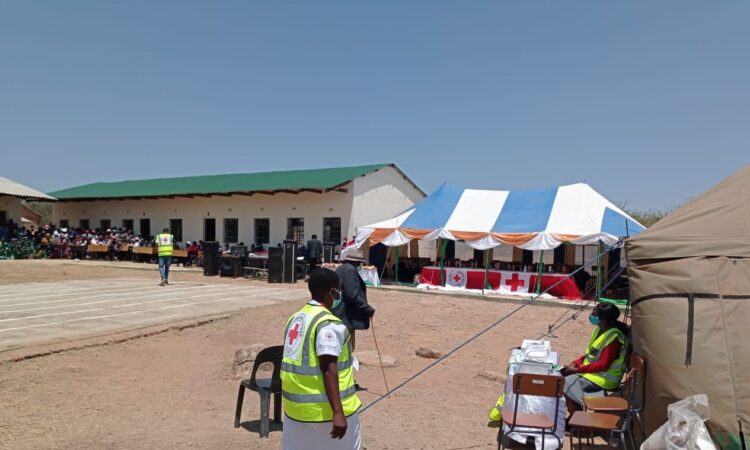
Speaking at the commissioning of a classroom block refurbished by the Zimbabwe Red Cross Society (ZRCS) at Kwite Primary School in the district Wednesday provincial education director Beatrice Manjere declared that no child should be left behind.

“There should not be any child who should be left behind. Every child should be at school whatever the barriers, be it hunger, school fees, they should come to us and we will attend to them,” she said.
“Mangwe should not be left behind and if we don’t push, we will be left behind. We need to make sure that our children’s future is well prepared by empowering them with the needs of education. So, as parents, you have a duty and let’s work together. This also dovetails with the government mantra of leaving no one behind,” she told the gathering.
Manjere said they have since engaged the Meteorological Services Department for the project software components in a bid to address safety concerns brought about by strong winds and other harsh weather elements.
“Mangwe, being prone to strong winds and adversely affected by climate change, has seen most of the schools’ classroom blocks being destroyed by strong winds and some schools in the district suffered even human losses due to lighting.”
The project is currently in its second phase and has seen the incorporation of five more schools, bringing the total to 15 schools.
Manjere further said that through this project, some schools with blocks destroyed by strong winds and other weather elements were built back better in compliance with safety standards.
Manjere said apart from the refurbishment of the classroom block, targeted schools were supported in constituting school disaster management committees which are trained in disaster management, school risk assessment and contingency planning.

ZRCS vice-president Dubilizwe Mpofu said the overall expected outcome of this intervention is to ensure that children and youth, and their home communities, are more resilient to disasters and have safer learning environments.
He also said learners should be able to prepare for, respond to, and recover from disasters.


