



STAFF WRITER
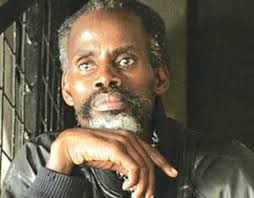
AMAKHOSI Cultural Centre founder and revered arts guru Continueloving Mhlanga who is now based in Lupane, this week shared his views with The Zambezi News on a number of issues.
Below are the excerpts of the interview.
Q: Now that you are nolonger active in the arts industry, what’s your new vision for Amakhosi?
A: My vision is to transfer leadership of Amakhosi to the new generation, so my job is to connect my generation and the younger generation. I am just keeping institutional memory and try to transfer to them for such things as vision of Amakhosi and its future that can be better articulated by this young generation who are taking over from me. My job is to make sure they retain the reason why we formed Amakhosi which is to give space to marginalized creative. It doesn’t matter who is driving Amakhosi or what vision one has, that vision has to serve the creative who are marginalized or the young ones who are not yet known. It is for them to get space to express themselves and showcase their talents, that’s the biggest vision. What is different now is the strategy per every management on such issues as how will you achieve a specific goal, how will you make young artists access space to create bigger content, how will you make young artists access television airwaves.
Q: Having retired from the industry leaving behind a rich history do you think you have played your part?
A: No, I feel I have not been able to transfer my vision to the next generation so that they are able to do what I do better. It stresses me like meeting someone here in Bulawayo or in my rural area telling me about our past productions such as Makorokoza, there is something wrong there, he or she should be telling me about the latest productions in the market and how better they are than our own old productions. So this all indicates a deficiency of lack of transfer of knowledge and skills to the younger generations. Every time when I am at home I feel sad because there is a whole generation that we didn’t hand over our knowledge and skills so that they can take over from us the old generation.
Q: You have retreated back to your rural home in Lupane, what keeps you busy there?
A: I am a thorough villager like any other villager. I wake up in the morning look after my goats, listen to what other villagers are saying and attend meetings among other usual duties in a rural set up.
I have also been receiving visits from people who want to tap from my vast knowledge in the arts, some even call me. Then there is also a project that was started by my wife, called Pupushangani Carnival, where we started putting together local villagers for that arts event. We started training villagers, and school children and the project has been growing. So from time to time that’s what we do.
Q: One of the most prominent musicians ever to come out of Bulawayo, Lovemore Majaivana was recently quoted in some media explaining the reasons why he left Zimbabwe, some of which included tribal imbalances and lack of support of music from the southern region, what’s your take?
A: He has always said that and that is exactly what it is. His reasons were valid for that time because that’s exactly what it was. He didn’t say that it will remain like that because it was dependent on the structures of music promotion at that time and the consumers who were there at that time. But things have since changed from Majaivana’s time to this day, there are a lot of factors involved. The only reason why people from Matabeleland are failing to get support is because the artists are not engaging their fans. They marginalize their fans. They don’t know who their fans are and they don’t care about their fans. What they care about is that their fans should just love them. From nowhere, it doesn’t work like that because when you do music, it’s a product, take that product to the people persuade them, introduce yourself to the fans. We did it with theater here in Bulawayo, it had no fans, but we took it to the people, we made people know us and appreciate us and we filled venues. Some of us left jobs to pursue theater and we made lots of money out of it. The same fans that Majaivana said didn’t support him, the same fans that our artists today say are not supporting them are the same fans that filled our venues. It’s not about fans but you the owner of the product who doesn’t know what to do with your product.
Q: Coming out of Covid where do you see our arts industry?
A: Arts never dies. Arts is something amazing, it doesn’t matter about politics, poverty or pandemics, arts will always survive because art is in people. Unfortunately our art has always suffered in its national administration. Nationally as a sector look at arts against other sectors, such as mining, finance and ICT among others then you see that arts, culture and heritage are a sector that have been largely ignored by government. Coming out of Covid you can see the deficiency, there is no sign from government in terms of helping the sector or let alone securing the credibility of the sector. The National Arts Council (NAC) of Zimbabwe is supposed to be very strategic and proactive in building and securing the sector then forwarding things to minister or relevant authorities for implementation. The biggest challenge in the arts sector now is the disconnect between the NAC and the people who have the knowledge and are experienced in the industry. You can’t go to people who don’t have a global picture of the arts sector and expect them to give advice and direction to the sector. So that disconnect can only be dealt with if whoever is the NAC director reaches out to the right people.
Q: I understand you are one of those who have applied for a television license, tell us more
A: I am only here to assist a team who are putting together a proposal for accessing television airwaves. Already we have a team here in Bulawayo who have accessed radio airwaves so is the team in Victoria Falls who have accessed radio airwaves through Breeze FM, however we have a bigger challenge in this region or rather nationally where we have been marginalized when it comes to television airwaves. In many people’s homes, the airwaves are being dominated by foreign airwaves. We only have ZTV which also marginalizes people and gives priority to politicians more than creatives. When you watch television it’s all about what the politicians say and not what they do. When it comes to talent, culture arts, creative expression there is no budget for that. So, it’s important that, now that airwaves are being opened by government, those of us who have always been pro talent, pro creativity and pro culture need to make sure we have a channel that priorities creatives.
Q: So have you applied for the licence?
A: Yes we have and on Thursday we will be making our presentation during the ongoing public hearing. There are 14 people who applied and only six are going to be awarded, but it may turn out that we are the only one from this region who applied, but that doesn’t give us an edge over others. We don’t want to win the licence using bias but because we know what we want to do with it. We have provisionally named our television station Keyona TV.


